
ASA or PETG Outside? Pick the Problem You Want to Solve
Posted by SFL Designs on Oct 20th 2026
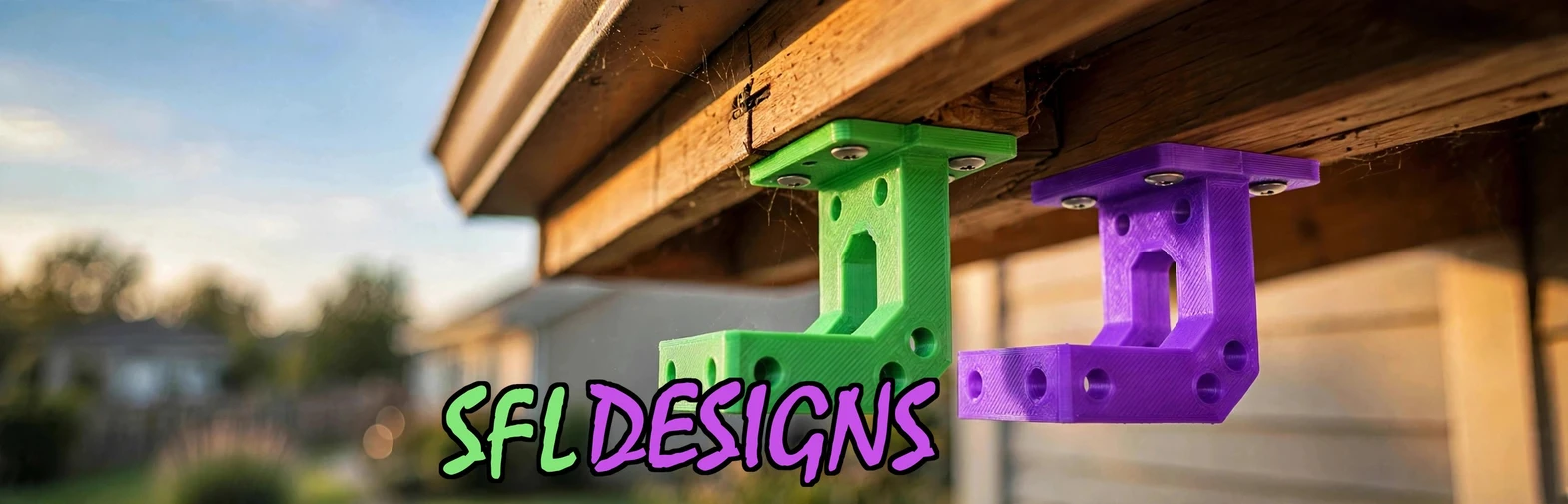
“Is PETG good outdoors?” is one of those questions that sounds simple right up until the honest answer starts with “It depends.”
Outside can mean a shaded cable guide under an eave. It can also mean a black bracket baking in direct summer sun, getting frozen in winter and bumped during takedown by somebody wearing gloves and losing patience.
Same planet. Very different job.
ASA and PETG can both make useful outdoor parts. The better choice comes from the failure you are trying to prevent, and the printer setup you can run reliably.
Start with the environment, not the filament label
Before choosing material, answer four questions:
- Will the part live in direct sunlight or mostly in shade?
- Will it sit near a heat source or on a surface that gets hot in the sun?
- Does it need stiffness, or should it flex instead of cracking?
- Can you print inside an enclosure with proper ventilation?
That last question matters. A material with impressive properties does not help if every other print warps off the bed or if you cannot operate it safely.
PETG is the easier practical choice for many parts
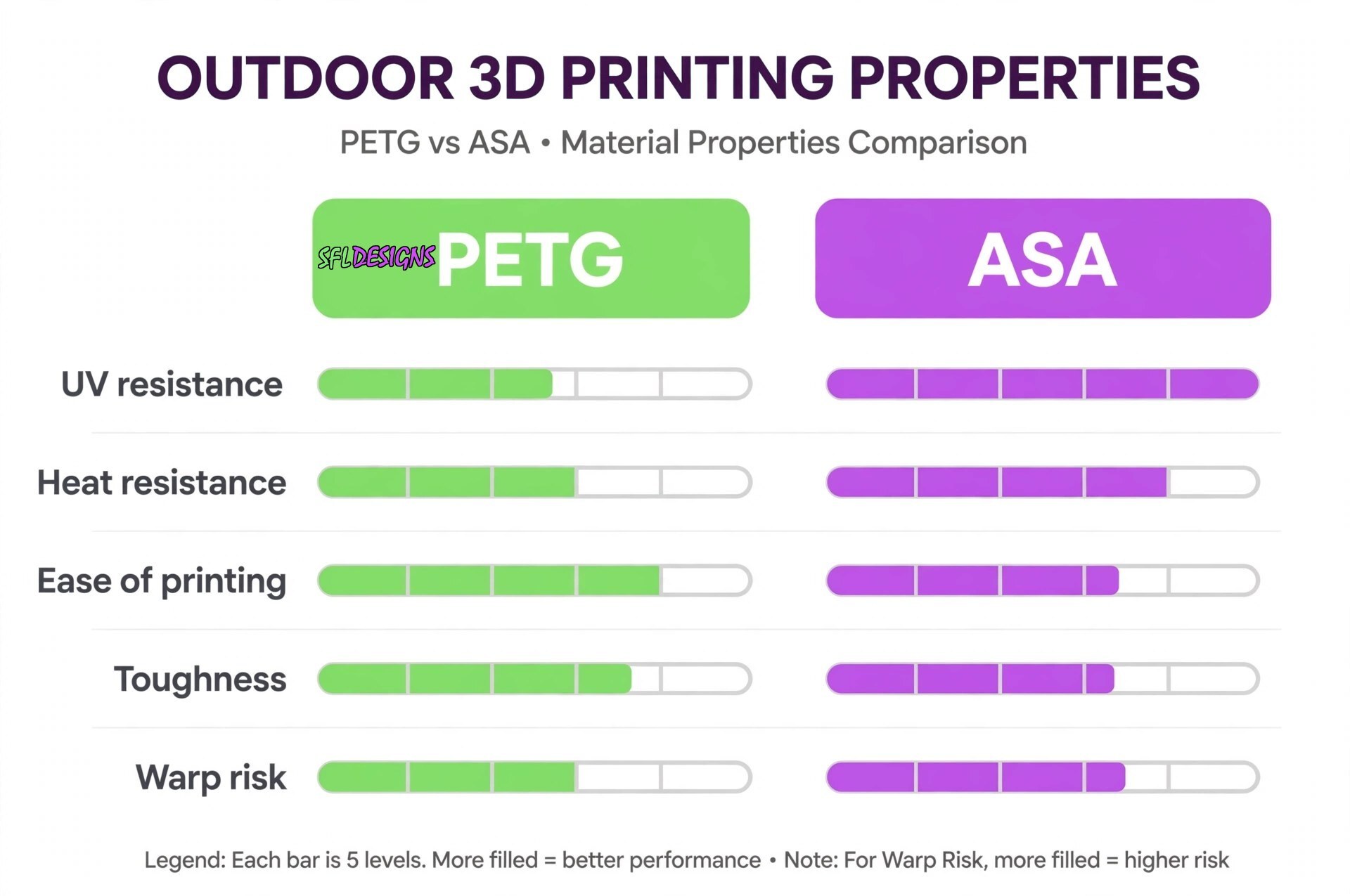
PETG is popular for functional printing because it is tough, slightly flexible and generally cooperative compared with higher-warp materials. It has good layer adhesion and handles many holders, clamps and mechanical parts well.
It also prints large shapes with relatively little shrinkage. That does not mean “zero warping,” because 3D printers enjoy humbling absolute statements. It means PETG is often the calmer starting point.
For a protected outdoor part that does not see extreme heat or years of hard ultraviolet exposure, PETG may be entirely sensible.
The tradeoff is that “suitable for many outdoor uses” is not the same as “best possible weather resistance.” Long exposure, color, temperature and loading still matter. A printed part is a system: geometry, orientation, wall thickness, color, material and environment all show up for the test.
ASA is built for weather, but asks more from the printer
ASA is commonly chosen for technical outdoor parts because it offers strong ultraviolet and temperature resistance. It is a good candidate when sun and weather are central requirements rather than occasional visitors.
One environment deserves its own warning: anything mounted on a roof. Shingles in direct summer sun run far hotter than the air around them, hot enough to soften PETG and let it creep under load, even on a day that does not feel extreme. A part bolted to a roof, or sitting against shingles, lives in a different climate than the same part on a shaded wall. For roof-mounted parts, ASA is the preferred filament. Full stop.
The bill arrives during printing.
ASA is more prone to warping from temperature differences. Large parts benefit from an enclosure and stable air around the print. Drafts can cause trouble. Printing also requires proper ventilation because the process can release fumes you do not want hanging around the room.
So the decision is not “ASA is better; therefore use ASA.” The real decision is “Does this part need ASA’s advantages, and can the process produce it consistently and safely?”
Use this plain-language decision guide
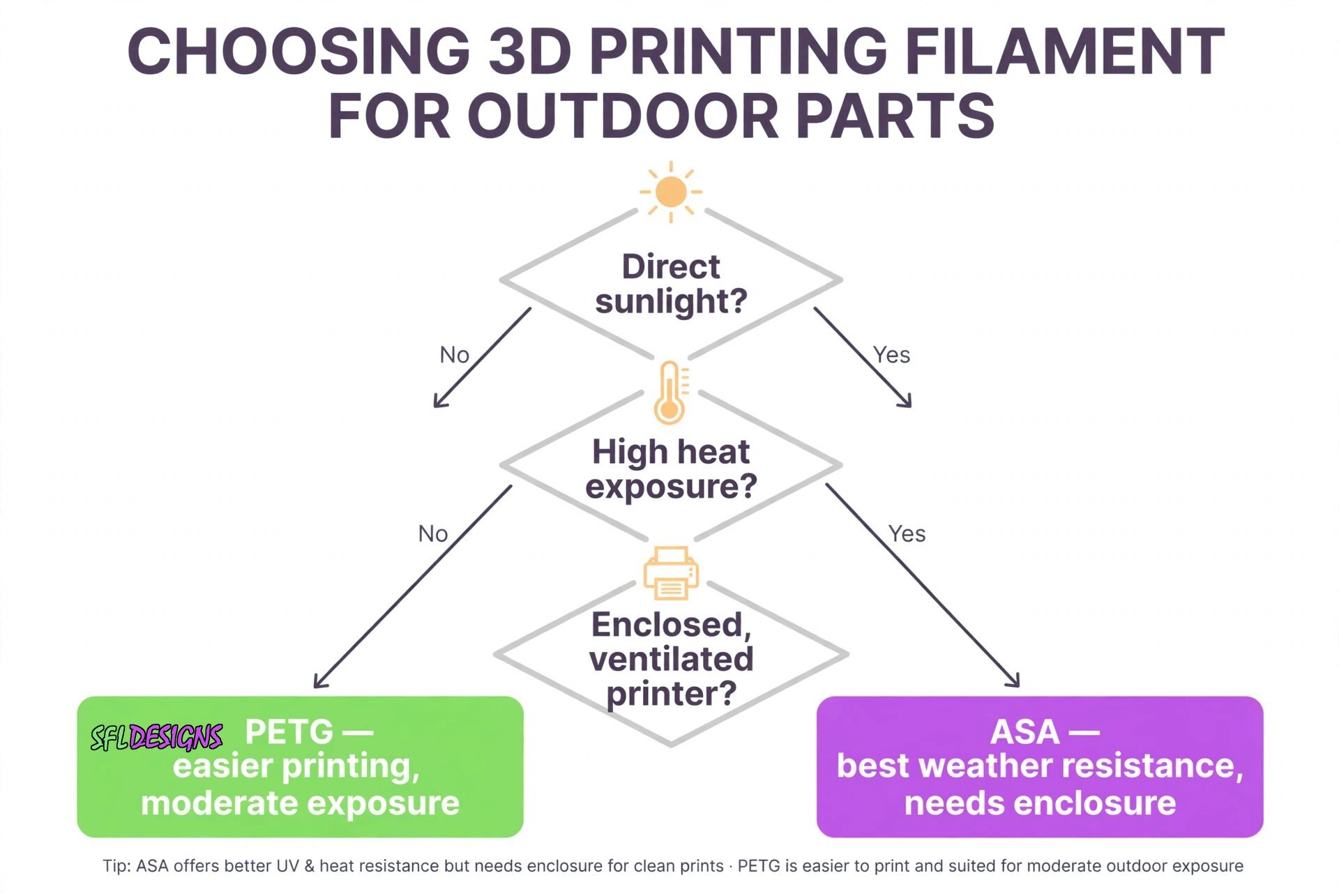
Choose PETG first when the part is moderately exposed, needs some toughness or flex, and easy, repeatable printing matters most.
Choose ASA first when long-term sun and weather resistance are major requirements, higher service temperature matters (roof and shingle mounts included), and you have an enclosed, properly ventilated printing setup.
Neither bullet is a guarantee. Filament brands and blends vary. Part geometry changes performance. A thin clip and a thick equipment cover do not behave the same just because the spool label matches.
Do not let material choice cover for weak design
If the load pulls directly across layer lines, changing filament may not fix the weak direction. If a sharp inside corner concentrates stress, a tougher polymer may only delay the crack. If a clip must flex farther than the geometry allows, the material is being asked to negotiate with physics.
Check orientation, wall thickness, stress paths and the shape of flexible features. Then choose the material.
This is why two parts printed from the same spool can have very different lives outside. One was designed for the load. The other was a hopeful rectangle.
Print a test that resembles the real job
A tiny cube can confirm that the printer extrudes the material. It does not prove that a full-size mount will survive summer heat, winter handling or repeated flexing.
When the application matters, print a small test feature that copies the real risk: the snap, the screw boss, the thin wall, the outdoor color, the actual orientation. Put it where it will live and inspect it over time.
That sounds slower than guessing. It is still faster than replacing a batch.
PETG and ASA are not rival sports teams. They are tools. Define the environment, choose the tool that fits, and design the part so the material gets a fair chance.
— Jason, SFL Designs
From our workbench to your display — print it, mount it, light it up.