
The Bars Test: Prove Your Layout Is Telling the Truth
Posted by SFL Designs on Oct 31st 2026
This morning we sized the power for the whole house. This afternoon we ask the whole house a question, and we make it answer honestly.
Here is where we stand. Two weeks ago you drew your layout and built your first models. Last week you introduced your controller and handed every model to an output. On the screen, everything looks perfect. The problem is that the screen will happily lie to you. A model can be drawn facing the wrong way, start in the wrong corner, or count from the wrong end, and the preview will still look fine, because the preview shows the model the way you drew it, not the way the prop is actually wired and hung.
So before anybody sequences a single note, we run the bars test: the five-minute lie detector for your whole layout.
What the test is
The bars effect paints moving stripes. Put bars on every model in the show at once, point them one direction, and watch the real props (or the house preview, once your outputs are uploaded) answer.
The trick is that bars are honest in a way a pretty effect is not. A soft color wash looks fine on a model that is secretly flipped. A marching stripe cannot hide. If the model in xLights matches the prop in the yard, the stripes sweep across the whole house in one clean, orderly pass, prop after prop, like a wave crossing the yard in formation. Wherever the wave stumbles, a model is lying, and the stumble tells you which lie it is.
Round one: vertical bars, sweeping across
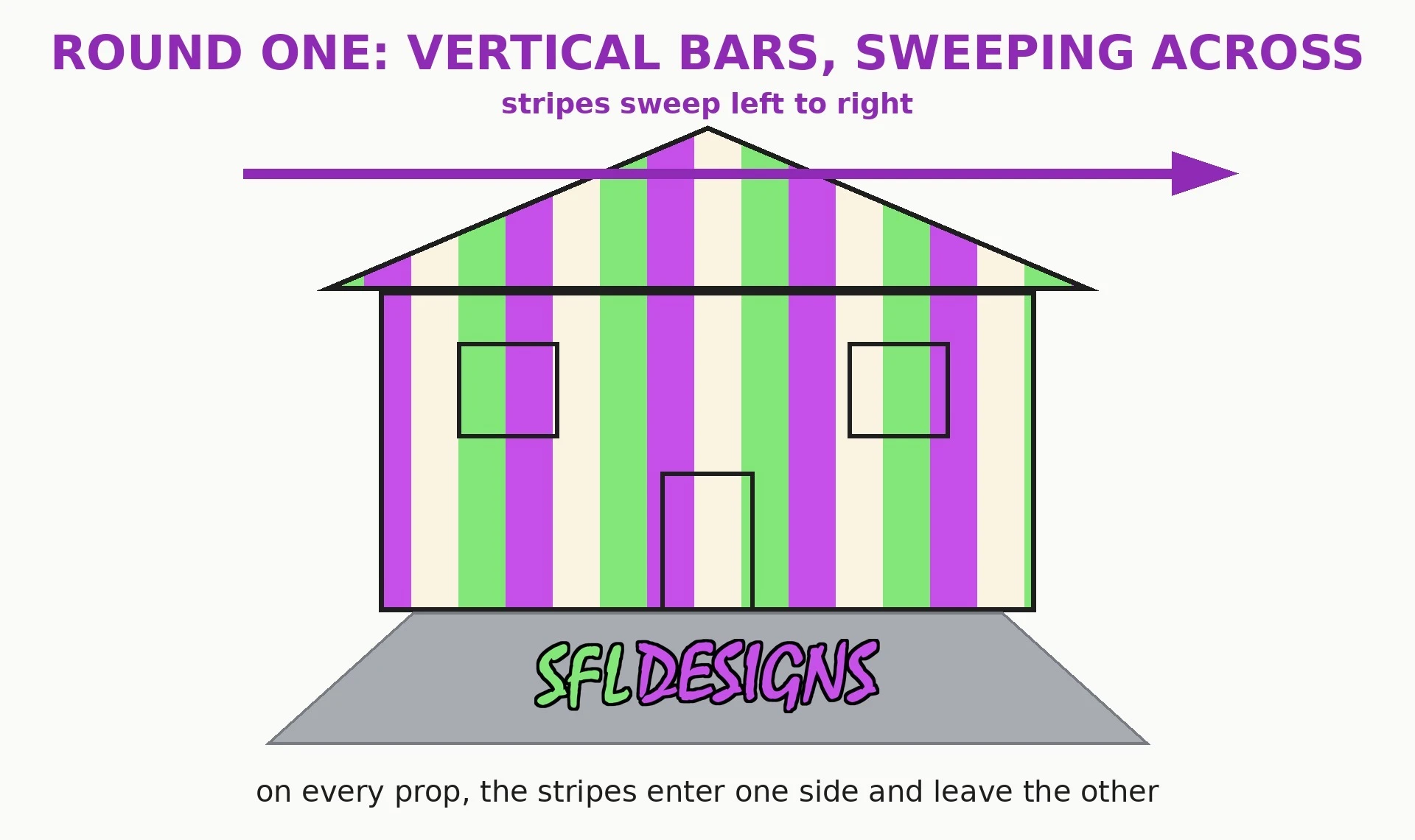
Set the bars vertical (stripes standing up) and sweeping across the house, left to right. Watch each prop as the stripes pass through it. You are reading three things.
- Right answer: the stripes walk across the prop in the same direction they walk across everything else, entering one side and leaving the other. This model is telling the truth.
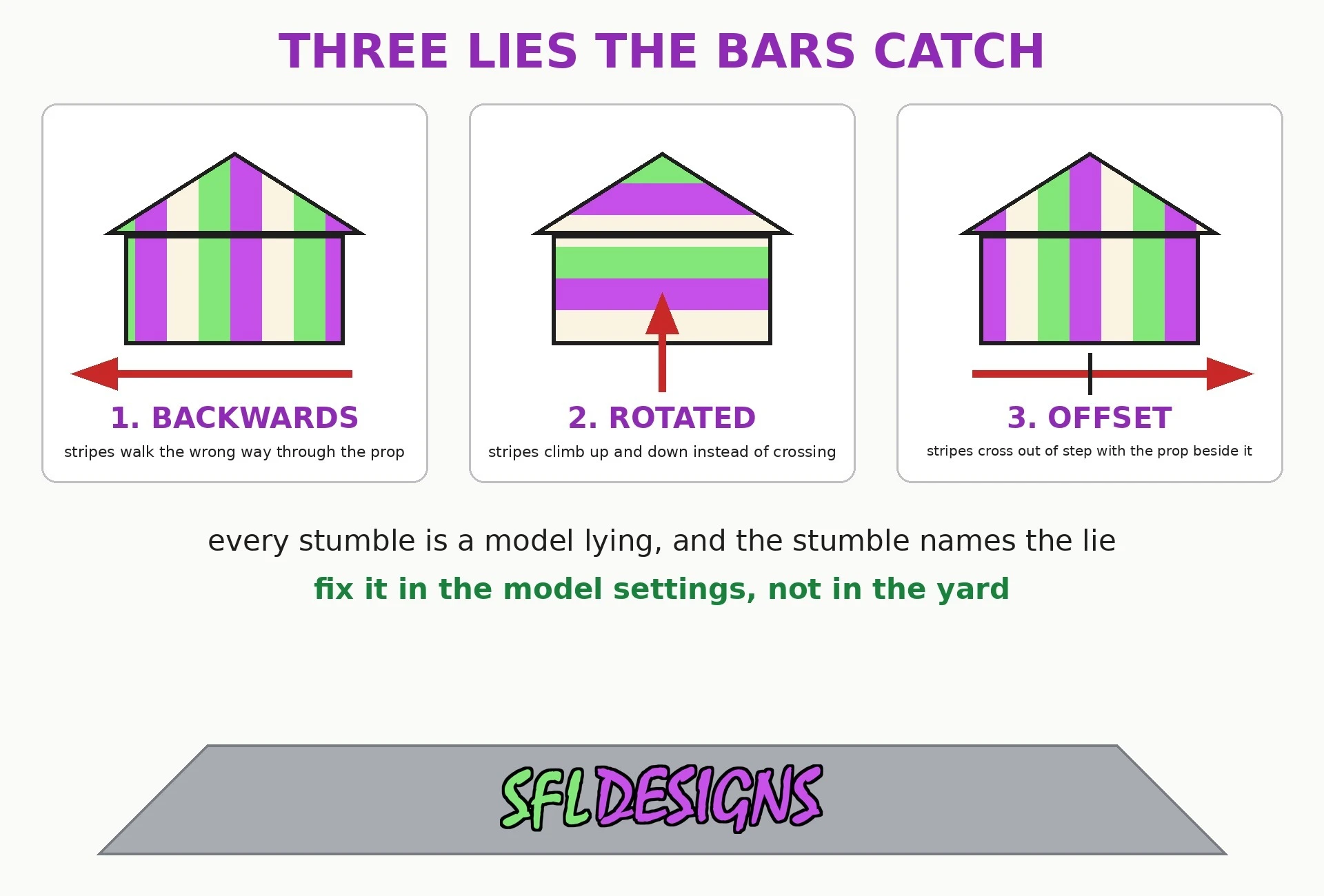
- The backwards lie: the stripes walk the wrong way through the prop, right to left while the rest of the house goes left to right. The model's idea of where the string starts is flipped end for end against the real prop.
- The rotation lie: the stripes climb up and down the prop instead of crossing it, or cross it at a wrong angle. The model is drawn rotated against how the prop is actually hung: a prop you built upright in the layout is mounted sideways in the yard, or the other way around.
Round two: horizontal bars, sweeping down
Now turn the bars sideways (stripes lying flat) and sweep them down the house, top to bottom. This round catches the lies the first round cannot see.
- Right answer: the stripes roll down each prop in step with the house, top edge to bottom edge.
- The upside-down lie: the stripes roll up the prop instead, or start at its bottom. The model starts at the wrong end vertically: drawn starting at the top, wired starting at the bottom.
- The offset lie: the stripes cross the prop in the right direction but out of step, arriving early or late against the prop beside it, or one half of a prop marching out of time with its other half. Something in the counting is shifted: the model starts in the wrong corner, or the prop's first pixel is not where the model thinks it is.
Shop note: Keep a lie list. Every stumble you see goes on the show map in pencil, prop name and lie, before you fix a single one. Then fix one lie, run the bars again, and cross it off. Folks who fix three things at once and retest cannot tell which fix worked, and folks who trust their memory of the yard at midnight are writing fiction.
Fix it in the model, not in the yard
Here is the good news, and it is the whole point of testing now: every lie above is a drawing problem, and drawing problems get fixed at the desk, for free, in October.
Each fix lives in the model's own settings in xLights. The backwards prop needs its start flipped to the other end. The rotated prop needs its orientation turned to match how it hangs. The upside-down and offset props need their starting corner moved to the corner where the real string truly begins. Change the setting, run the bars again, and watch the wave clean up. No ladder, no rewiring, no standing in the yard swapping plugs and hoping.
One honest exception before we finish. If you run the bars at full white and the far end of a long run blushes pink while it sweeps, that prop is not lying to you. That is voltage fading down the run, which is a power story, not a layout story, and it is exactly where this series goes next Saturday morning. Note it on the map and keep testing.
When the bars sweep clean across the whole house, both directions, your layout is telling the truth, and everything you sequence from here on is built on honest ground. Next Saturday we pick up the two threads we laid down today: power injection for those pink ends in the morning, and groups in the afternoon, which let you paint the whole house with one effect and rerun this very test one section at a time.
— Jason, SFL Designs
From our workbench to your display — print it, mount it, light it up.